Tek Neopany: Creating Pathways for Others
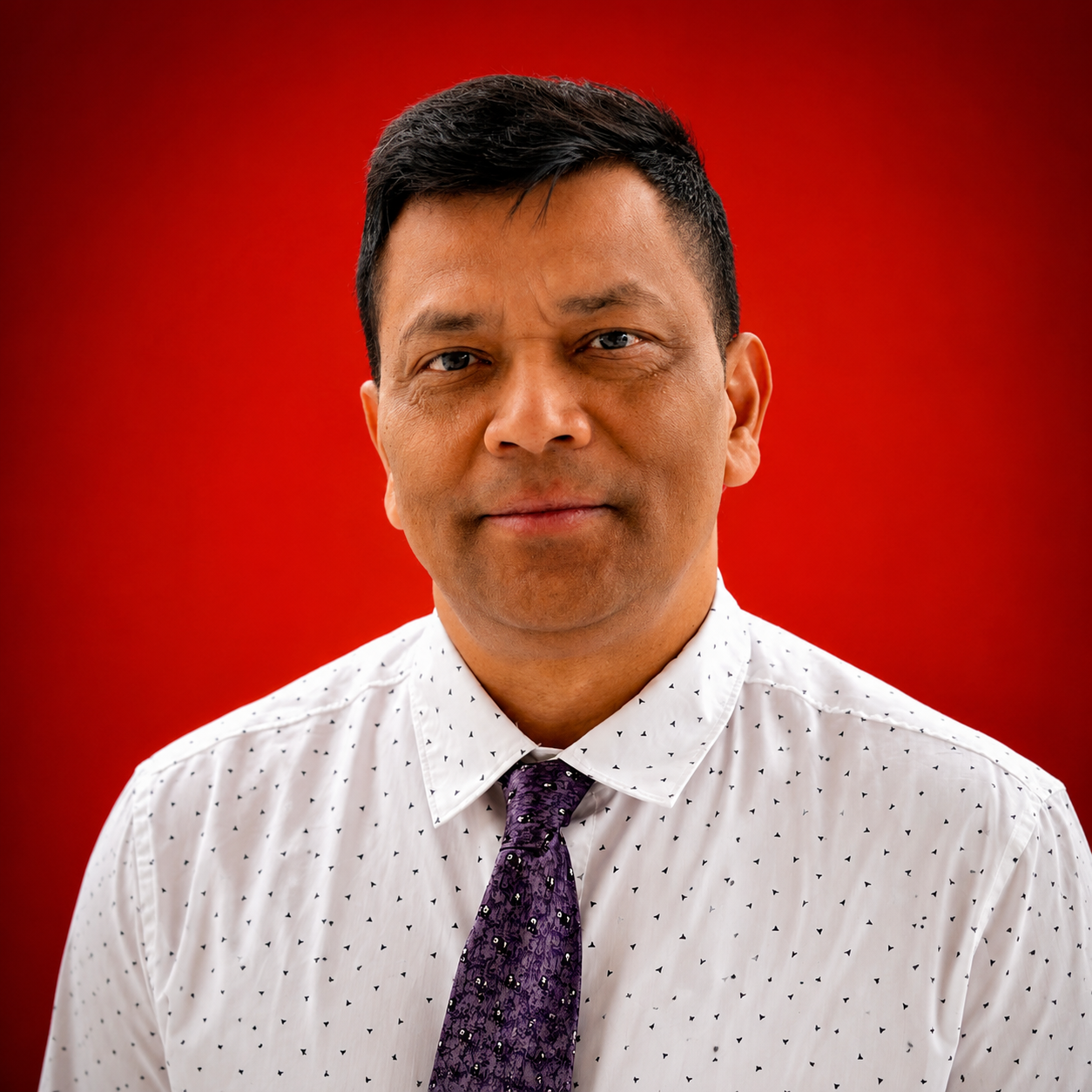
Every week, a man arrived at a leadership program despite an obstacle that would have stopped most people: he had no car, no driver's license, and relied on others for a ride to class. Those rides were an act of faith. Every week, someone transported not just a student, but a future community leader whose years of serving refugee communities and lived experience had already shaped an unwavering vision for change.
A Life of Service Across Borders
In 1993, Tek's parents fled Bhutan after facing arbitrary arrests and persecution. Tek and his family spent the next 20 years living in a refugee camp in Nepal. The hardships of that experience shaped his lifelong commitment to serving others. Tek arrived in Utah in 2013 with a clear sense of purpose: to continue supporting immigrant and refugee communities. His journey reflects both academic achievement and practical experience. He is a licensed social worker in Utah with academic training in sociology, political science, language, community development, and family studies. He later earned an MBA from the University of Utah.
From Learning to Leadership
“After building my own confidence and skills, I established a nonprofit under my leadership,” Tek reflects on his time at WLI. The lessons he gained during the program became the foundation for his leadership. He recalls how learning about Asset-Based Community Development provided a framework for community action, while understanding the power of social media helped him strengthen relationships and expand his outreach.
In 2016, just one year after completing WLI's Fundamentals course, Tek founded Community Building Services (CBS), a nonprofit serving Nepali and Bhutanese communities through organizational capacity building, family empowerment, youth development, internship programs, and support for community-based organizations. Through partnerships with organizations such as the Columbus Community Center, CBS promotes cultural preservation, social empowerment, and artistic expression while strengthening underrepresented communities.
Adapting to Sustain Community Work
Tek’s leadership extends far beyond Community Building Services. Sustaining a nonprofit requires entrepreneurial thinking, particularly when funding landscapes change. As the refugee population in the United States has declined, many traditional funding opportunities have disappeared. “People fear and sometimes have a dilemma whether to sustain the nonprofit organization,” Tek acknowledges. Rather than retreat, he has adapted in multiple ways. He learned to strategically frame grant applications so that the needs of the same families could still be recognized within changing funding priorities. “I cannot write Bhutanese refugees or Nepalese immigrants. I cannot write about refugees at all. So just write about a family with a low income.” For Tek, this shift is not about changing the mission of his work but about ensuring that his community's needs continue to be recognized within changing funding priorities.
Building Support Systems
For Tek, funding alone has never been enough. Lasting impact comes from building relationships and strengthening community. “We are constantly building the support system within the community,” Tek observes. This philosophy extends into his role as co-director of the Case Management Certificate at University Neighborhood Partners, a 10-month program affiliated with the University of Utah’s College of Social Work. The program serves cohorts of approximately 60 to 70 participants from countries including Uganda, Thailand, Vietnam, Malaysia, Afghanistan, and India. Through the certificate, Tek helps prepare future community leaders by providing what he describes as essential "workforce development, durable employability skills, life skills for adult capacity building, and pathways to self-sufficiency." In this way, Tek prepares others to become community leaders by helping them recognize the potential to build connections across cultures and create pathways forward.
Networks of Trust and a Vision for the Future
The networks Tek has built now extend internationally through collaborations with organizations such as Jesuit Refugee Services, which operates in Afghanistan and India. When asked about his greatest achievement, Tek doesn't point to an award or title. Instead, he points to "networking, generating connections, and building trust through the organizations." Through his lived experience, Tek has demonstrated how refugees can become empowered leaders by building networks, pursuing education, advancing their careers, and fostering cultural adaptation and integration.
Tek's leadership also extends beyond nonprofit management into education, training, and creative expression. Throughout his career, he has designed and delivered workshops that help community members strengthen leadership, workforce, financial, and civic skills. He is known for translating complex ideas into practical strategies, making him a trusted educator and mentor for emerging community leaders from a wide range of cultural backgrounds. Beyond the classroom, he uses filmmaking, photography, videography, and creative writing to preserve culture, tell stories of resilience, and inspire community engagement. Today, he collaborates with organizations including the Rising Together Coalition, South Sudanese Community of Utah, Lifting Humanity, Serve Foundation, and the Nepali Association of Utah, continuing his commitment to building stronger, more connected communities through leadership, creativity, and service.
After decades of dedicated service, Tek's vision continues to evolve. He is currently pursuing admission to a PhD program in Human Development and Social Policy, where he hopes to deepen his understanding of healthy communities and examine issues related to community growth, family economics, health equity, family policy and advocacy, community development, and environmental change through evidence-based and qualitative-interpretive research approaches. His story illustrates how resilience, lifelong learning, and service can transform hardship into opportunity—not only for one person, but for entire communities. He arrived at WLI facing logistical challenges that would have excused him from participation. Instead, he embraced the opportunity to learn and, within a year of completing the program, founded an organization that continues to create opportunities for others. Tek's journey demonstrates that leadership is not simply about titles or overcoming obstacles—it is about creating pathways so others can overcome them as well.
This profile was researched and written by University of Utah students Hayllen Meneses Rosas and Joaquin Lopez Huertas based on interviews conducted as part of the WLI Alumni Profile Series. The series explores how WLI graduates apply leadership skills developed through the Westside Leadership Institute to strengthen their communities. The project is led by Dr. Stacy Harwood and supported by funding from the College of Architecture + Planning Research Incentive Seed Grant Program and the University Neighborhood Partners Community Scholar in Residence Program at the University of Utah.
